
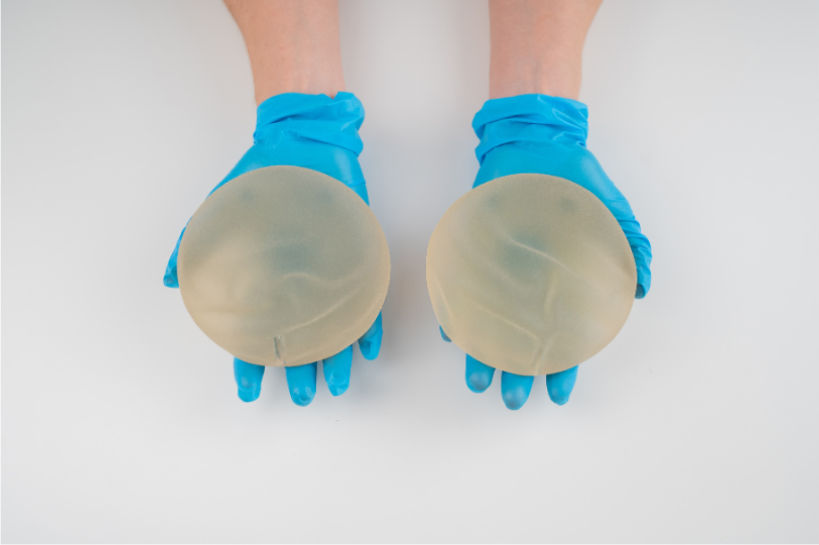
One of the most common concerns I hear from women considering breast implant removal is: “I’m ready to have my implants removed, but I’m worried about what my breasts will look like afterwards.”
It’s a very reasonable concern.
There are many reasons why someone may decide they no longer wants breast implants. Some women have concerns about implant-related risks or complications. Some report systemic symptoms that they associate with their implants, sometimes referred to as Breast Implant Illness (BII). Others simply no longer like the appearance, size or feeling of having breast implants.
Whatever the reason, removing an implant changes the volume and shape of the breast. How significant that change will be depends largely on how much of your current breast volume comes from the implant and how much natural breast tissue remains.
What happens to your breasts when implants are removed?
The most important thing to understand is that removing an implant does not necessarily return the breast to exactly how it looked before breast augmentation.
Your breast has changed since the implant was inserted. The tissues may have stretched, your natural breast tissue may have changed with age, pregnancy, breastfeeding or weight fluctuations, and the implant itself may have contributed substantially to the current breast volume. Once that volume is removed, the breast may look smaller and less full.
If the implant accounts for a significant proportion of the current breast volume, the breast can initially appear quite deflated after implant removal.
There may also be some degree of drooping, or ptosis, in the natural breast tissue that remains.
Will my breasts look saggy after implant removal?
They can, but this varies considerably between patients.
Several factors influence the appearance of the breast after explant surgery, including:
- the size of the existing implants;
- how long the implants have been present;
- how much natural breast tissue you have;
- the quality and elasticity of your skin;
- your age;
- previous pregnancy and breastfeeding;
- weight changes;
- the current degree of breast drooping;
- and the relationship between the implant and your natural breast tissue.
Someone with relatively small implants, good skin elasticity and a reasonable amount of natural breast tissue may have a very different result from someone whose implants provide most of her current breast volume.
This is why photographs of other women’s explant results can only tell you so much. Your starting anatomy matters.
The FDA similarly advises that after implants are removed without replacement, natural breasts can undergo aesthetic changes including sagging, wrinkling, puckering, dimpling or tissue loss.
Will my breasts go back to how they looked before implants?
Not necessarily.
This is an important expectation to establish before surgery. Breast implant removal is not simply the reverse of breast augmentation. If several years have passed since your original surgery, your skin and breast tissue will also have aged and changed during that period.
Pregnancy, breastfeeding, menopause, weight fluctuations and the effects of gravity can all contribute.
The goal of consultation should therefore not be to promise that your breasts will return to their original appearance.
Instead, your surgeon should assess what breast tissue you currently have and give you a realistic idea of what your breasts are likely to look like after the implant is removed.
Can you simply remove breast implants without replacing them?
Yes.
Not every woman who removes her implants needs another implant or a breast lift.
Implant removal alone is an option. For some patients, that is exactly what they want. However, before choosing this approach, it is important to understand the likely aesthetic result.
If the implant is contributing a large proportion of the current breast volume, removing it without reshaping the remaining breast may leave significant empty skin and a deflated appearance.
This doesn’t automatically mean that additional surgery is necessary. It means that the patient needs to understand the trade-off before making her decision.
Do I need a breast lift after implant removal?
Not everyone does.
But when significant loose skin or breast drooping is expected after implant removal, a mastopexy — or breast lift — can be used to reshape and reposition the remaining natural breast tissue.
Rather than replacing the lost implant volume, the objective of the breast lift is to work with the patient’s own remaining tissue. Excess skin can be removed and the breast reshaped to create a more appropriate contour.
Whether that is necessary depends on the patient’s anatomy and aesthetic goals.
Can breast implants be removed and a breast lift performed at the same time?
Yes, in selected patients.
Implant removal and mastopexy can sometimes be performed during the same operation. However, that does not mean a simultaneous breast lift is automatically the best option for everyone.
Another approach is to remove the implants first, allow the tissues to settle and then reassess the breast before deciding whether a breast lift is required as a second-stage procedure. There are advantages and trade-offs to both strategies.
The decision depends on factors such as the existing breast tissue, skin quality, implant size, degree of ptosis and how predictable the breast shape will be after explantation.
This is something that needs to be determined during examination rather than through a universal rule.
Should I have my implants removed first and decide about a lift later?
For some patients, this can be a reasonable strategy.
If you are uncertain about having a breast lift, removing the implants first allows you to see how your natural breasts settle before deciding whether further surgery is worthwhile.
The trade-off is that you may require a second operation if you subsequently decide you would prefer a lift.
For other patients, the expected skin excess and breast drooping are sufficiently predictable that performing implant removal and mastopexy together may be appropriate.
Neither approach is automatically correct.
What about the breast implant capsule?
Every breast implant develops scar tissue around it, known as a capsule.
Implant removal does not automatically mean that the entire capsule needs to be removed in every patient.
Depending on the clinical circumstances, surgery may involve removing the implant alone or removing part or all of the surrounding capsule.
The appropriate approach depends on factors including the condition of the implant and capsule and whether there is a specific medical indication for capsule removal.
This distinction is important because more extensive capsule removal involves additional surgical dissection and may carry additional risks. The FDA similarly advises patients to discuss with their surgeon which approach is appropriate for their individual circumstances.
What about Breast Implant Illness?
Some women seek implant removal because they experience systemic symptoms that they believe may be associated with their breast implants.
The term Breast Implant Illness (BII) is commonly used by patients to describe symptoms including fatigue, “brain fog,” joint or muscle pain and other systemic complaints.
Some patients report improvement after their implants are removed. However, the relationship between breast implants and these symptoms remains incompletely understood, and BII is not currently defined by a specific diagnostic test or established diagnostic criteria. The FDA states that research is continuing to investigate these symptoms and their potential relationship with breast implants.
For that reason, I think this conversation requires careful assessment rather than promising that implant removal will resolve particular systemic symptoms.
How can my surgeon predict what I will look like after implant removal?
No surgeon can show you your exact postoperative result in advance. However, examination can provide a great deal of useful information.
I would assess how much of your current breast volume is implant versus natural tissue, the degree of skin stretching, the position of the nipple and remaining breast tissue, skin quality and the size and position of the existing implant.
From that assessment, we can have a much more realistic conversation about three potential pathways:
implant removal alone,
implant removal with breast lift, or
implant removal followed by a possible breast lift at a later stage.
The objective is not to persuade every patient to have additional surgery. It is to make sure she understands what implant removal alone is likely to achieve before she makes that decision.
Will my breasts look better immediately after implant removal?
It is important not to judge the final result immediately. The tissues need time to recover and settle after surgery, and the early postoperative appearance is not necessarily representative of the longer-term result.
Your surgeon should explain what changes are expected during recovery and when the breast shape can be assessed more meaningfully.
So, what will my breasts look like without implants?
There is no single answer.
If your implants represent only a relatively small proportion of your breast volume and you have good-quality skin and sufficient natural tissue, the change may be relatively straightforward. If the implants account for a large proportion of your breast volume, removing them may leave the breasts looking significantly smaller, deflated or droopy.
In those circumstances, a breast lift may help reshape the remaining natural breast tissue — either at the time of implant removal or as a second procedure.
The most important thing is knowing what to expect before surgery.
If you want your implants removed, your surgeon should be able to examine your existing breast tissue, explain what implant removal alone is likely to achieve and discuss whether any additional procedure would meaningfully improve the result.
Considering Breast Implant Removal in Dubai?
Deciding to remove breast implants is a personal decision, and not every patient needs to replace them or undergo a breast lift.
A consultation allows your existing implants, natural breast tissue, skin envelope and breast shape to be assessed so that you can understand what the different surgical options are likely to achieve.
To discuss breast implant removal with Dr Charles Bain, Consultant Plastic Surgeon in Dubai, book a consultation through the Mediclinic app or contact the team via WhatsApp: +971 56 970 3561.
This article provides general educational information and does not replace individual medical assessment. The appropriate operation, risks, recovery and expected aesthetic result vary between patients. New breast swelling, a breast mass, persistent pain or other significant changes around an implant should be medically assessed rather than assumed to be a cosmetic issue. The FDA specifically recommends evaluation for persistent swelling, a mass or pain around an implant because these can require investigation for implant-related complications.